
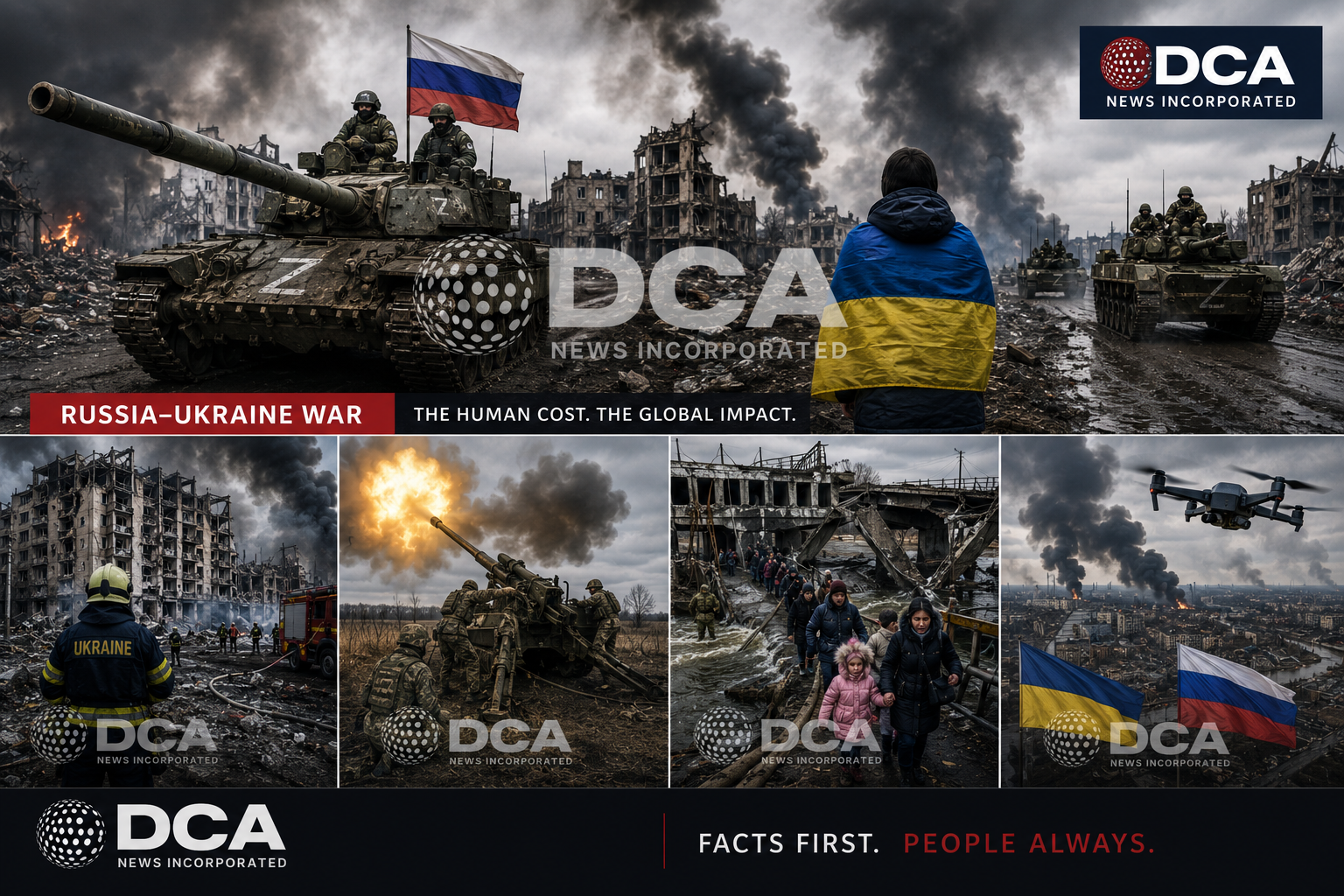
KYIV, Ukraine – The Russia-Ukraine war has entered another dangerous phase following a series of large-scale missile and drone attacks across several Ukrainian cities. This is intensifying concerns about regional security and the prospects for peace.
Military officials reported that Russian forces launched overnight strikes targeting key infrastructure and urban areas. This is happening as Ukrainian air defence systems intercepted many incoming missiles and drones. However, damage to civilian buildings and essential services has been reported in several regions.
The renewed offensive comes as diplomatic efforts to end the conflict continue to face significant obstacles. This is with both sides maintaining firm positions on territorial control and security guarantees.
Fresh Strikes Target Critical Infrastructure

According to Ukrainian authorities, multiple regions came under sustained aerial attacks. This is prompting air raid alerts across much of the country. There were emergency responders to combat the fire crises. This is also affecting rescueing civilians and restore damaged infrastructure. Local officials said residential buildings, transportation facilities and energy installations with others were in danger. Russia has not independently confirmed every strike reported by Ukraine. It has maintained that its military operations are aimed at strategic targets.
Ukraine Strengthens Air Defences
Ukraine’s armed forces said they successfully intercepted a significant number of missiles and drones during the latest assault, highlighting the growing effectiveness of Western-supplied air defence systems.
President Volodymyr Zelenskyy praised emergency services and military personnel for responding quickly while renewing calls for additional military assistance from international partners.
He also urged allies to accelerate the delivery of advanced air defence equipment to better protect civilians and critical infrastructure.
Russia Maintains Military Pressure
Russian officials continue to defend what Moscow describes as its “special military operation,” insisting that military objectives remain unchanged.
Analysts say the recent increase in aerial attacks reflects Russia’s continued strategy of placing pressure on Ukraine’s military capabilities while disrupting energy and transportation networks.
The Kremlin has repeatedly stated that any future negotiations must address what it considers Russia’s long-term security interests.
International Community Calls for Restraint
Governments across Europe, North America and Asia have expressed growing concern over the latest escalation.
NATO leaders continue to reaffirm their support for Ukraine, while emphasizing the importance of preventing the conflict from expanding beyond Ukraine’s borders.
The United Nations has also renewed calls for the protection of civilians and respect for international humanitarian law as the fighting continues.
Global Economic Impact
The intensifying conflict is once again drawing attention from financial markets around the world. Energy prices, grain exports and international shipping remain vulnerable to disruptions caused by continued fighting. Economists warn that prolonged instability could place additional pressure on global inflation, food supplies and international trade. European governments are also monitoring potential impacts on energy security as the conflict enters another critical period.
Peace Negotiations Remain Uncertain
Despite periodic diplomatic discussions, no comprehensive ceasefire agreement has been reached. Both Russia and Ukraine continue to insist that lasting peace will require guarantees addressing their respective national security concerns. International mediators have encouraged continued dialogue, but analysts believe meaningful negotiations remain difficult while military operations continue.
Why This Matters
The Russia-Ukraine conflict remains one of the world’s most significant geopolitical crises. Its impact extends beyond Eastern Europe, influencing global energy markets, food security, defence spending, migration and international diplomacy. With both sides continuing military operations, the conflict is likely to remain at the centre of global attention in the coming months.
Conclusion
The latest escalation in the Russia-Ukraine war demonstrates that the conflict remains far from resolution. As missile and drone attacks continue, governments around the world are watching closely for any developments that could either intensify the fighting or create an opportunity for renewed diplomacy. For millions of civilians affected by the conflict, hopes for lasting peace remain tied to future negotiations and sustained international engagement.