
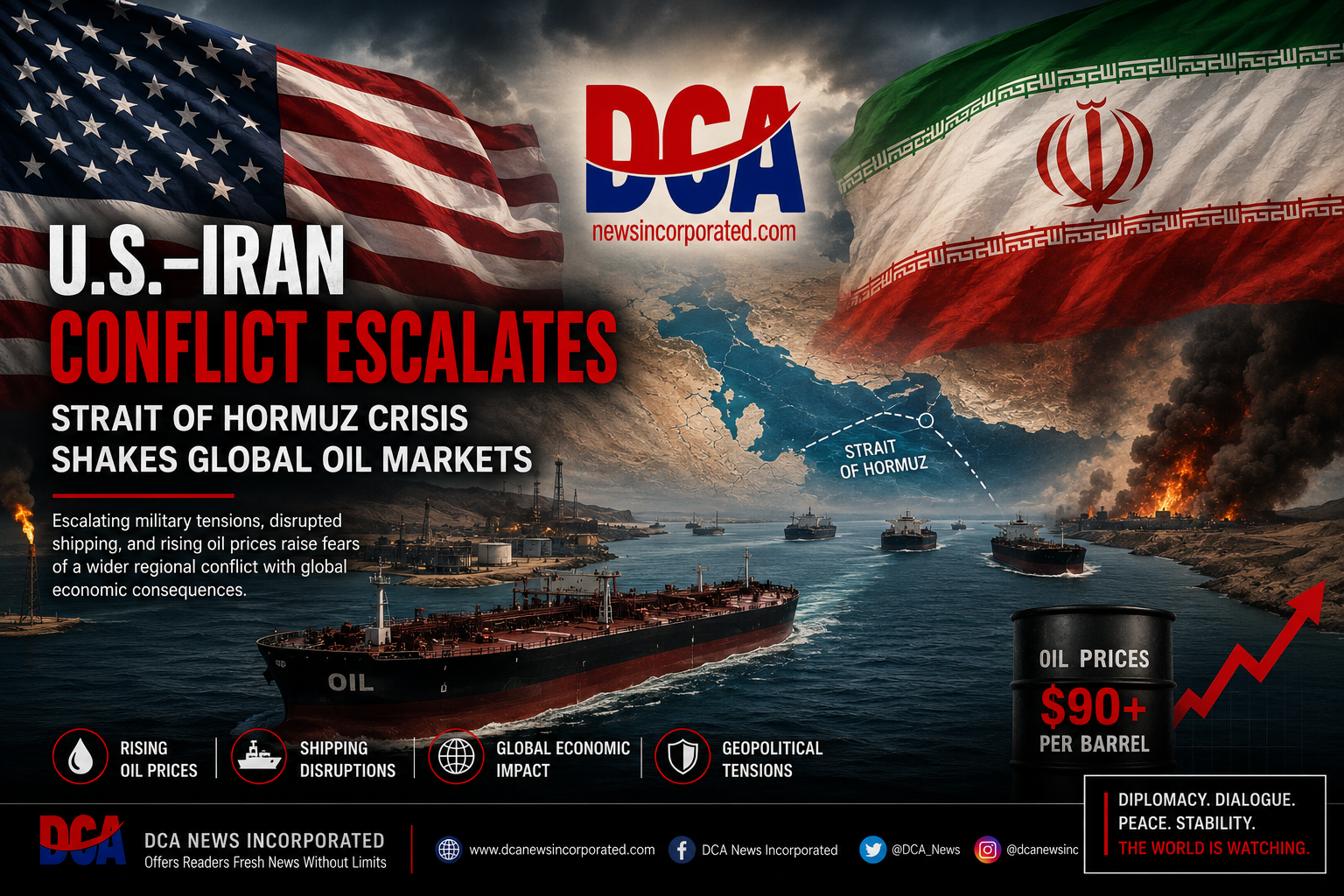
The fragile balance of peace in the Middle East shakes again as military tensions intensifies. This is between the United States and Iran. This is placing it as one of the world’s most strategic maritime corridors—the Strait of Hormuz—under unprecedented pressure.
Recent airstrikes, retaliatory military operations, and growing uncertainty surrounding commercial shipping have renewed fears. This confrontation could evolve into a wider regional conflict with profound implications for the global economy. Energy markets have reacted swiftly, with crude oil prices climbing above $90 per barrel amid concerns over supply disruptions and shipping security.

The Strait of Hormuz remains one of the world’s most critical energy transit routes. It is serving as the gateway for a significant share of globally traded crude oil and liquefied natural gas. Any sustained disruption along this narrow passage has the potential to ripple across continents, affecting transportation costs, manufacturing, food prices, inflation, and economic stability.

For many nations that rely heavily on imported petroleum products, this includes numerous African economies. It is discovered that consequences could extend far beyond energy markets. This is rising fuel prices often translate into higher costs of living, increased transportation expenses and elevated food prices.