
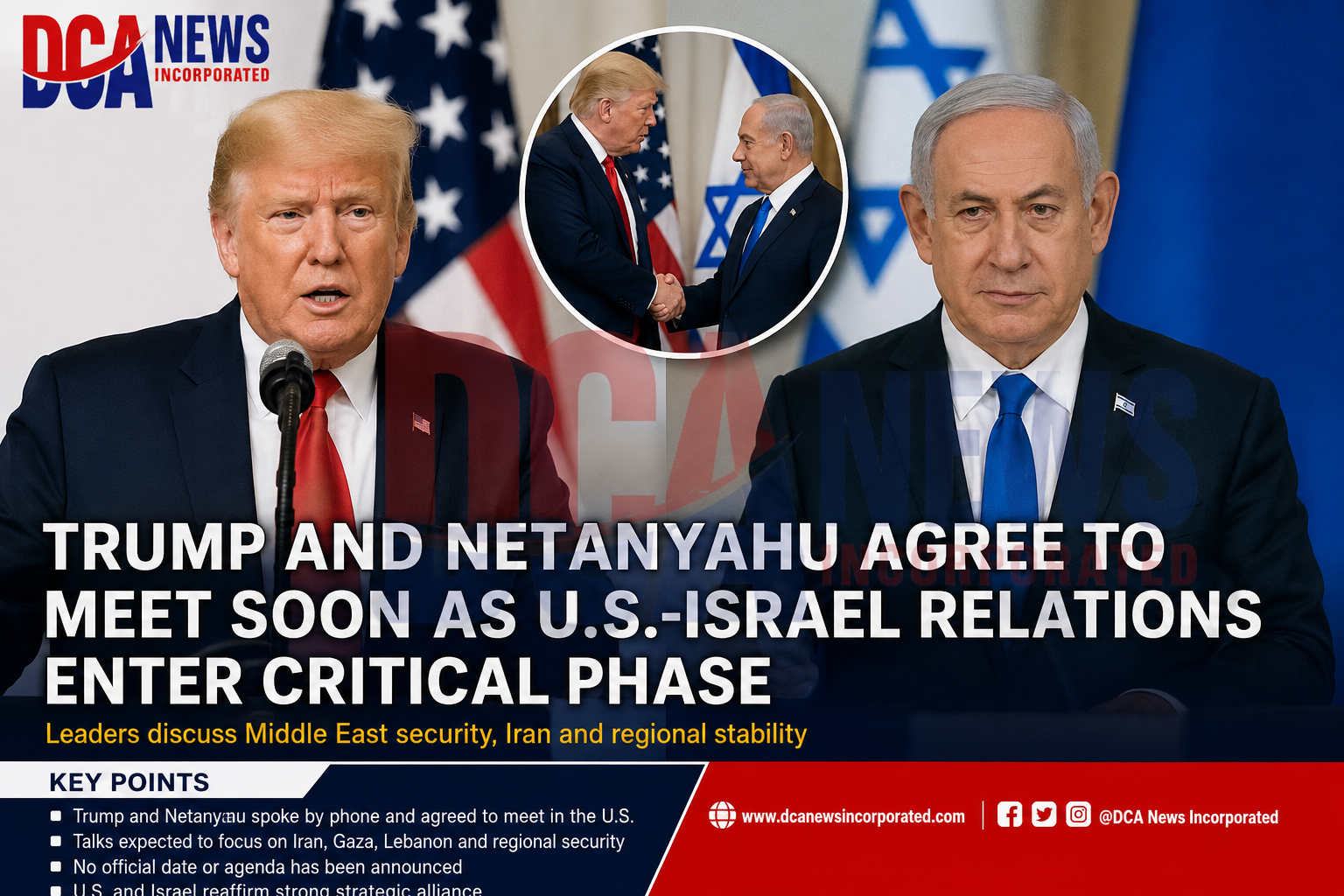
WASHINGTON/JERUSALEM — U.S. President Donald Trump and Israeli Prime Minister Benjamin Netanyahu have agreed to hold an in-person meeting in the United States. This is following a telephone conversation that underscored the importance of the long-standing alliance between the two countries. The announcement comes as the Middle East continues to grapple with security challenges involving Iran, Lebanon and Gaza.
According to a statement released by Netanyahu’s office, the Israeli leader congratulated Trump on the United States’ 250th Independence Day. He also reaffirmed Israel’s appreciation for the close relationship between the two nations. The two leaders agreed to meet “soon” in the United States, although no specific date has been announced.

Meeting Comes After Regional Military Tensions
The planned meeting follows months of heightened tensions across the Middle East. The United States and Israel have coordinated closely on regional security issues, particularly after recent military developments involving Iran. At the same time, reports have suggested that differences have emerged over how to manage diplomacy and military operations in the region.
Despite speculation about strains in the relationship, officials from both governments have continued to describe the U.S.-Israel partnership as strong and strategically important.
Iran Expected to Be High on the Agenda
Although neither government has released a formal agenda for the upcoming meeting, analysts expect discussions to focus heavily on Iran’s regional influence, security cooperation, ongoing diplomatic efforts, and broader Middle East stability.
Other likely topics include the humanitarian situation in Gaza, regional defence cooperation, intelligence sharing, and efforts to prevent further escalation across the region. However, these agenda items remain expectations rather than officially confirmed topics.
Global Attention on Washington
The planned meeting is attracting international attention because decisions made by Washington and Jerusalem often have implications beyond the Middle East. Financial markets, energy traders, diplomats and security experts are expected to closely monitor any announcements that emerge from the talks.
Observers believe the meeting could help clarify the next phase of U.S. policy toward the region while reaffirming the strategic partnership between the two allies.