
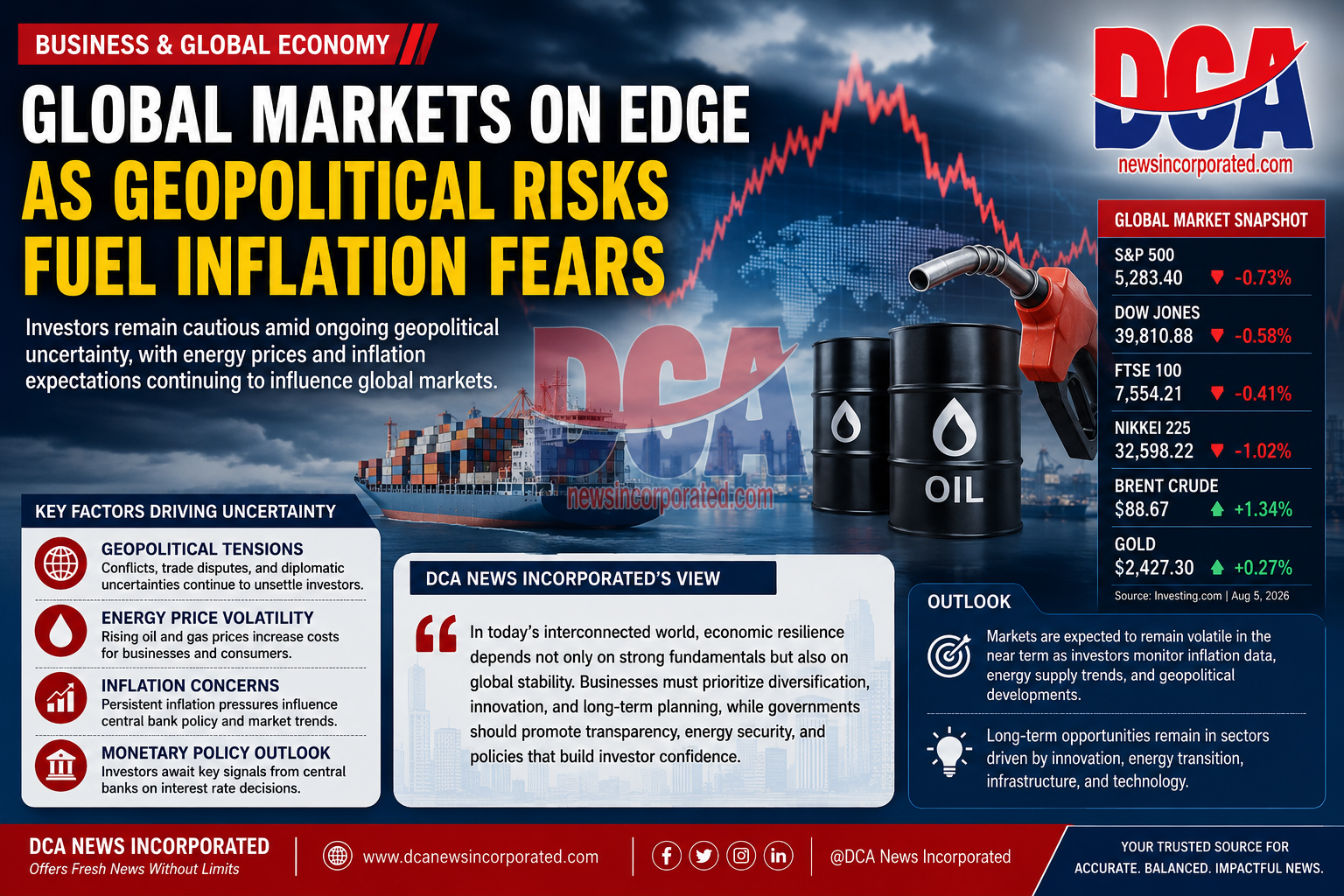
Financial markets across the world are navigating another period of uncertainty. This is due to geopolitical developments, volatile energy prices, and persistent inflation continue to shape investment decisions. From institutional investors to multinational corporations and central banks, economic stakeholders are carefully reassessing risks. This is resulting from a rapidly evolving global landscape.
Recent international developments have heightened concerns over supply chain resilience, commodity pricing, and future monetary policy. Although major stock markets have shown periods of resilience, investor sentiment remains cautious as global conflicts, diplomatic tensions, and trade uncertainties continue to influence economic expectations. Energy remains one of the most significant drivers of market volatility. Fluctuations in oil and natural gas prices have increased operational costs for businesses while placing additional financial pressure on households already facing elevated living expenses. Rising energy costs also contribute to inflation, making it more challenging for central banks to achieve price stability.

Major central banks are therefore expected to maintain a cautious approach toward future interest-rate decisions. Investors are closely monitoring economic indicators including employment data, consumer confidence, manufacturing output, and inflation reports before making significant portfolio adjustments.
Across global equity markets, sectors such as energy, defence, cybersecurity, and artificial intelligence have continued attracting investor attention. This is due to their strategic importance during periods of geopolitical uncertainty. Meanwhile, industries heavily dependent on international trade and stable commodity prices continue facing heightened operational risks.
Emerging markets have experienced mixed outcomes. Some countries have benefited from stronger commodity exports, while others remain vulnerable to capital outflows, currency depreciation, and external debt pressures as investors seek relatively safer assets.
At DCA News Incorporated, we believe today’s investment environment demonstrates that economic resilience is no longer determined solely by corporates. This also involves corporate earnings, domestic policies, geopolitical developments, international diplomacy, energy security and technological competition.