
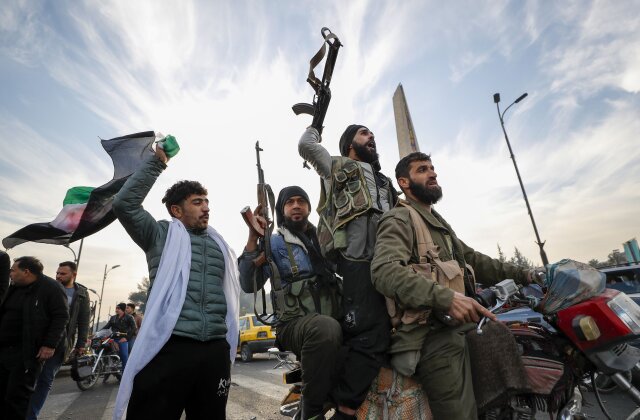
This dramatic turn of events is as a profound shift in Middle Eastern geopolitics. It is perhaps the most significant since the 1979 Iranian Revolution. Assad’s 50-year family rule, which began when his father, Hafez al-Assad, took power in a 1971 coup, was built on brutal repression. This is including the infamous 1982 massacre in Hama. There are strategic alliances with Russia and Iran. His son Bashar, who took power in 2000. He continued these alliances while ruthlessly suppressing opposition.

The collapse of the Assad regime, analysts argue, is a delayed consequence of the 2011 Arab Spring. This toppled several long-standing autocrats, including Egypt’s Hosni Mubarak and Libya’s Moammar Gadhafi. Assad, the last of the secular, Arab nationalist leaders who had once dominated the region, was a symbol of an era now ending.
Assad’s downfall is especially significant in the current volatile context of the Middle East. Ceasefire talks between Hamas and Israel, stalled for over a year after the brutal October 7 attack, have quietly resumed. Tensions with Iran are rising as the country accelerates its nuclear program. The fall of the Assad regime also represents a major blow to Iran, which had relied on Syria as a key ally for decades. The Assad government was crucial to Iran’s ability to arm Hezbollah in Lebanon, and its collapse weakens Tehran’s position in the region. While Iran may save money by no longer needing to subsidize Assad’s government, it also faces a new geopolitical challenge.
The collapse of Assad’s regime also undermines Russia, which had invested heavily in supporting Assad’s rule. Russia’s military intervention in 2015 turned the tide of the war in Assad’s favor, bolstering President Vladimir Putin’s influence in the region. But with Assad gone, Russia loses its foothold in Syria.