
Scientists are warning that 2026 could become one of the hottest years ever recorded. This is as a strengthening El Niño combines with long-term global warming. This involves the likelihood of severe heat waves, droughts, and other extreme weather events across several regions of the world.
Climate researchers say rising global temperatures expects to place additional pressure on public health, agriculture, water resources, ecosystems, and energy infrastructure. There are communities experiencing extreme weathers. They may face more frequent and prolonged periods of intense heat during the second half of the year.

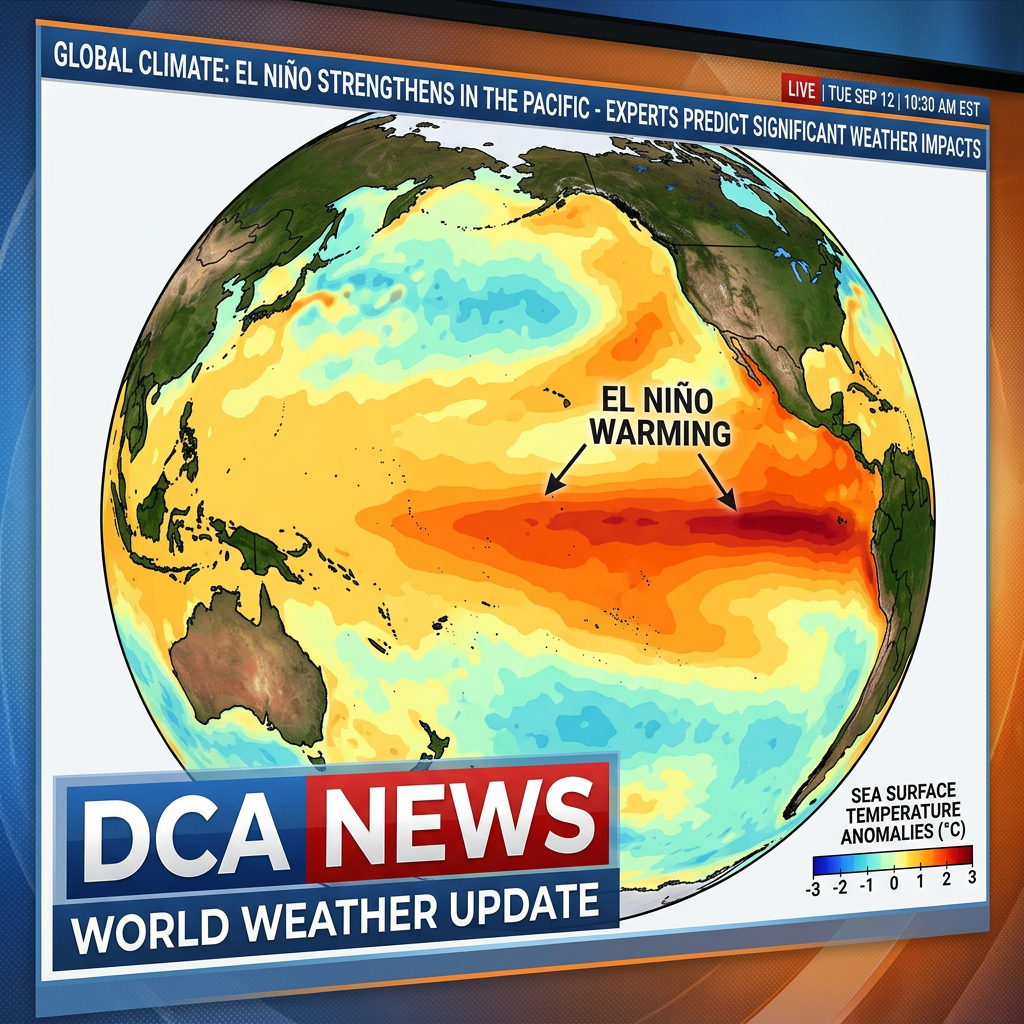
A weather map showing El Niño warming and sea surface temperature changes in the Pacific Ocean.
El Niño is a naturally occurring climate pattern. This develops when sea surface temperatures in the central and eastern Pacific Ocean become warmer than average. While El Niño is part of Earth’s normal climate cycle, its effects can amplify existing warming trends. This is leading to higher global temperatures and changing rainfall patterns.
Meteorological agencies are closely monitoring ocean temperatures, atmospheric circulation, and seasonal forecasts to better understand how weather conditions may evolve over the coming months.
Heat Waves Becoming More Frequent
Climate experts note that heat waves have become more frequent and longer-lasting in many parts of the world. Higher temperatures can increase the risk of:
- Heat-related illnesses and deaths
- Wildfires
- Water shortages
- Reduced agricultural productivity
- Increased electricity demand
- Damage to ecosystems and biodiversity
Urban areas may experience even higher temperatures due to the “urban heat island” effect, where buildings, roads, and concrete surfaces absorb and retain heat.
Agriculture and Food Security Under Pressure
Extreme heat and irregular rainfall may affect crop production, livestock health, and food supply chains. Farmers in drought-prone regions could face declining harvests, while rising temperatures may also influence global food prices.
Agricultural experts encourage governments to strengthen irrigation systems, promote climate-resilient farming practices, and invest in sustainable food production technologies.
Energy Demand Expected to Increase
Higher temperatures typically lead to increased demand for electricity as households and businesses rely more heavily on cooling systems.
Energy providers may experience greater pressure on power grids, particularly during prolonged heat waves. Countries investing in renewable energy, energy storage, and resilient infrastructure may be better positioned to manage rising electricity demand.
Public Health Concerns
Health authorities advise vulnerable populations—including older adults, young children, outdoor workers, and individuals with chronic medical conditions—to take precautions during extreme heat events.
Experts recommend:
- Drinking plenty of water.
- Avoiding prolonged exposure to direct sunlight.
- Wearing lightweight clothing.
- Checking on elderly relatives and neighbors.
- Following official weather advisories.
Climate Science Continues to Advance
Researchers continue improving climate models to better predict temperature trends and weather extremes. These advances help governments, businesses, emergency services, and communities prepare for changing environmental conditions.
Scientists emphasize that while El Niño contributes to short-term climate variability, long-term warming trends are influenced by multiple factors, including greenhouse gas emissions.
DCA News Incorporated’s View
At DCA News Incorporated, we believe the warning that 2026 could become one of the hottest years on record should encourage informed public discussion and practical action rather than fear.
Climate resilience begins with preparation. Governments should strengthen early warning systems, invest in climate-resilient infrastructure, expand clean energy projects, and support research that helps communities adapt to changing weather patterns. Businesses can contribute by improving energy efficiency, reducing environmental impacts, and adopting sustainable practices that strengthen long-term economic resilience.
Individuals also play an important role by conserving water, reducing energy waste where possible, staying informed through official weather advisories, and taking sensible precautions during periods of extreme heat.
Climate change is a global challenge that crosses borders. Addressing it effectively requires scientific collaboration, responsible policymaking, technological innovation, and informed public participation. By working together, nations can reduce risks while building stronger, more sustainable communities for future generations.
Looking Ahead
Climate experts will continue monitoring ocean temperatures and atmospheric conditions as El Niño develops. Seasonal forecasts are expected to provide further guidance on regional heat patterns, rainfall, and potential weather extremes.
While uncertainty remains regarding the exact severity of impacts in different regions, scientists agree that preparation and adaptation will remain essential throughout 2026.
Conclusion
The possibility that 2026 could become one of the hottest years on record highlights the importance of climate awareness, scientific research, and coordinated action. Whether through improved infrastructure, responsible environmental policies, or individual preparedness, societies can better manage the risks associated with rising temperatures and extreme weather.
As climate conditions continue to evolve, staying informed through credible scientific reporting will be critical for governments, businesses, and citizens alike.